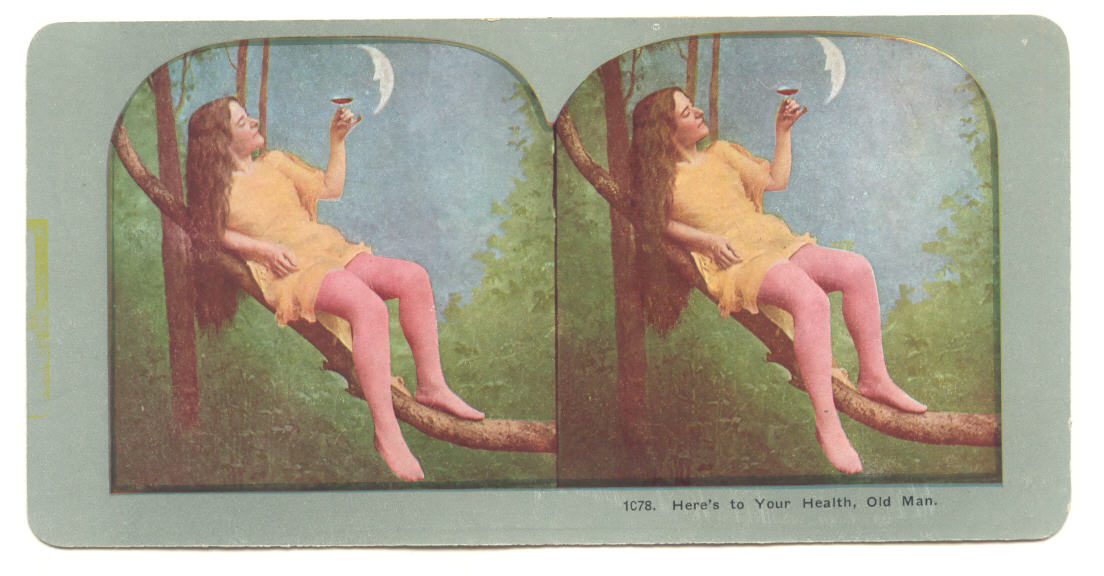
And one last, for a nightcap. There’s a verse on the back:
Here’s to your health, old man in the moon,
Here’s hoping you’ll get full again pretty soon.
Here’s hoping your last quarter’ll last through your dark days.
May you light the way homeward for good fellows always.
(Posted by Doug Skinner)
Tags: Stereoscopy
July 23rd, 2008 · Comments Off on Beneath a Stereoscopic Moon (3)
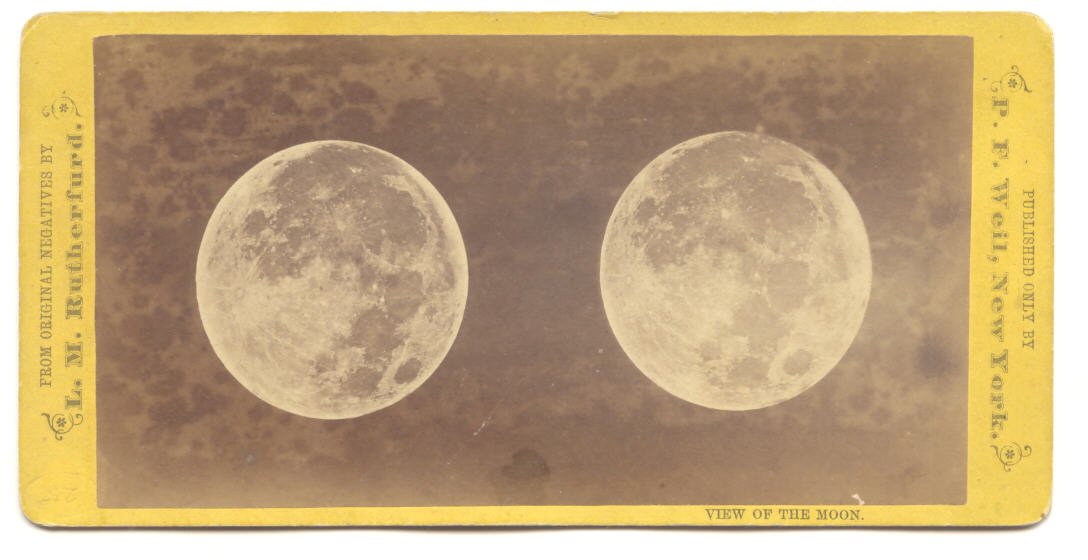
Our third view is “From original negatives by L. M. Rutherford. Published by P. F. Well, New York.”
(Posted by Doug Skinner)
Tags: Stereoscopy
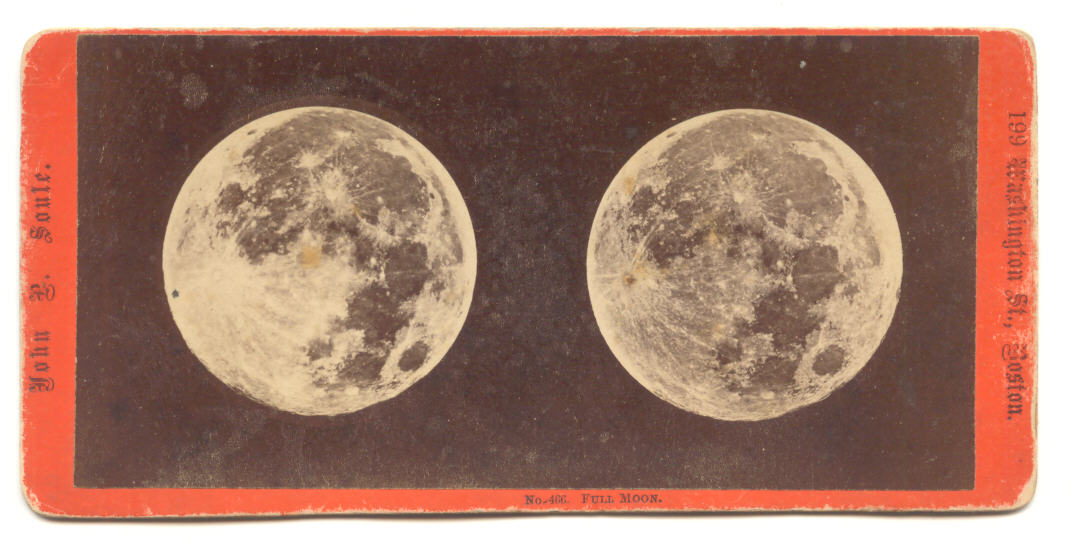
This second view is credited to John P. Soule, 199 Washington St., Boston. It’s not clear if he was the photographer or the publisher; my guess is that he was both.
(Posted by Doug Skinner)
Tags: Stereoscopy
July 21st, 2008 · Comments Off on Beneath a Stereoscopic Moon (1)
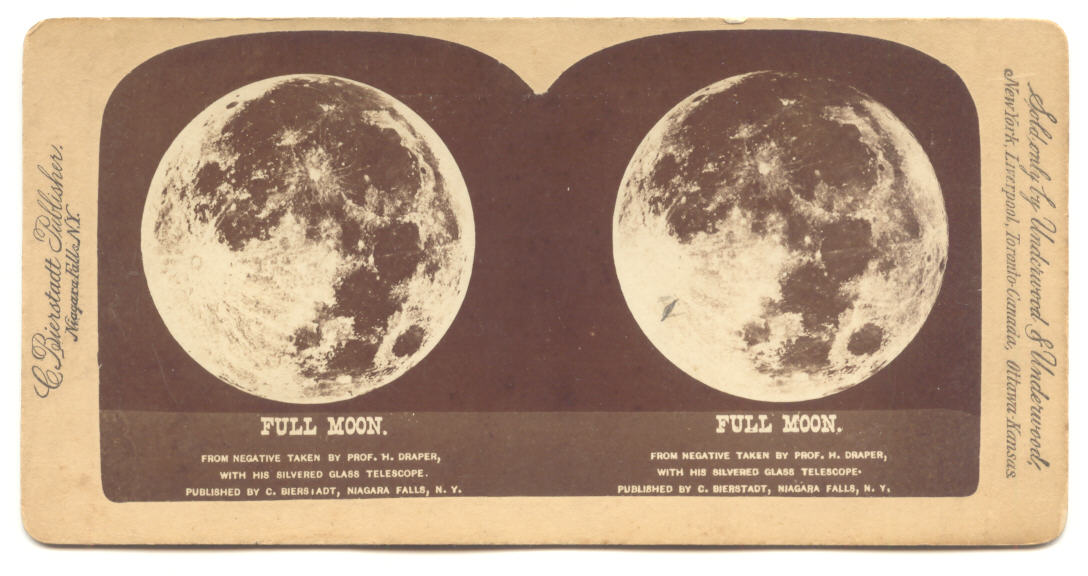
This week we’ll salute our beloved satellite with some stereoscopic photos of the moon. The moon is really too far away for our binocular vision to kick in. But it does rotate on its axis, so that photos taken at different times during the night will show a slightly different perspective. Pop them into your stereoscope, and the moon will look like a nice round cantaloupe, beaming down on us from above.
All of these are probably from the 19th century. The first one is labeled (in tiny print): “FULL MOON. From negative taken by Prof. H. Draper, with his silvered glass telescope. Published by C. Bierstadt, Niagara Falls, N.Y.”
(Posted by Doug Skinner)
Tags: Stereoscopy
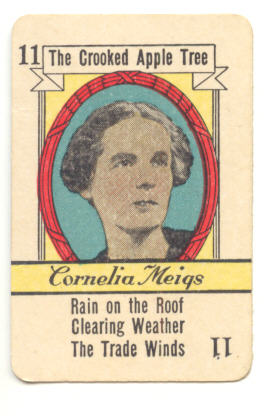
We have here another edition of that old favorite, “Authors,” this one a 1935 miniature deck from the Russell Press. I’m not familiar with Cornelia Meigs; but a bit of research reveals that she wrote many children’s books, and taught English for many years at Bryn Mawr.
(Posted by Doug Skinner)
Tags: Card Games · Ephemera
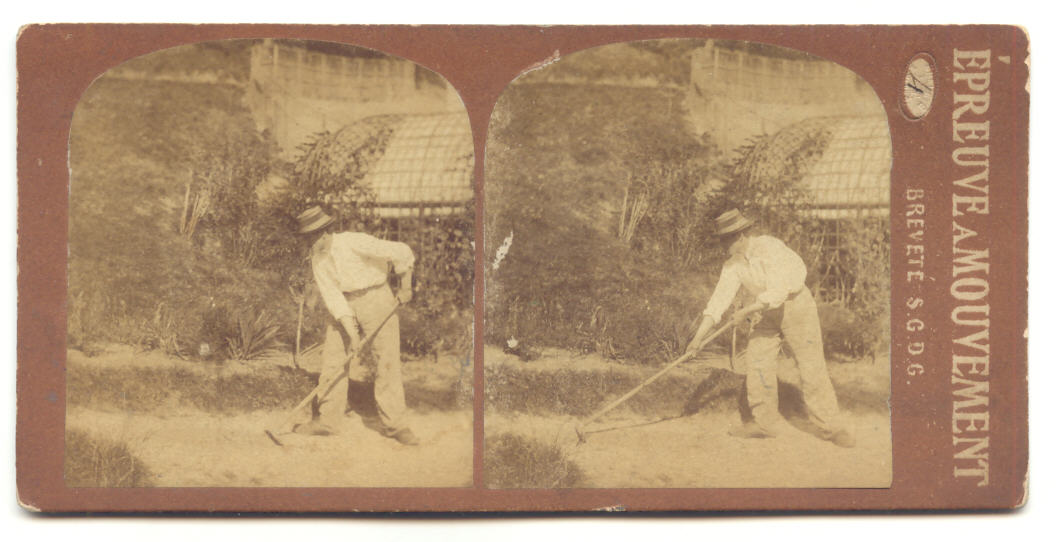
The “Movement Print” offered a new pleasure for the discerning stereoscope owner. You inserted it, blinked your eyes rapidly in alternation, and enjoyed a brief moving picture of somebody else working.
I have no idea when these were produced. I’d like to know what other subjects, if any, were chosen.
(Posted by Doug Skinner)
Tags: Dead Media · Diversions · Ephemera · Stereoscopy
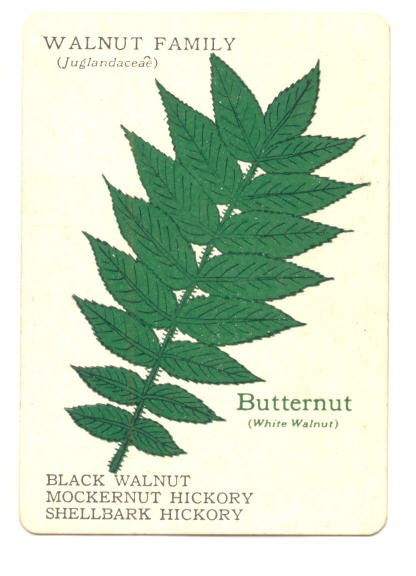
“ARBO: The Game of Tree Families” was published by the Scholastic Publishing Co. in 1927. The young players are directed to complete and capture suits of tree families. Thus they learn the rudiments of both dendrology and gambling.
The backs of these games are usually uninteresting; this one, though, is worth a look.
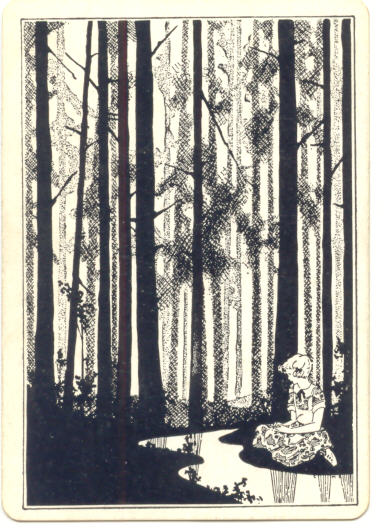
(Posted by Doug Skinner)
Tags: Card Games · Ephemera
There is a wonderful variety of short literary forms: limericks, quatrains, haiku, couplets, epigrams, anecdotes, jokes, riddles, parables, fables, proverbs, maxims, blackouts, slogans, and on and on. Some are simply passing thoughts; others pack as much meaning as possible into the smallest space.
Here, we’ll trot out the one-word poem — to be specific, the one-word poem as practiced by Abraham Lincoln Gillespie.
Gillespie (1895-1950) was active in Paris in the ’20s, an ebullient modernist who contributed to transition and other journals. He attributed his taste for Joycean puns and neologisms to a head injury, which may have cost him some critical respect. In the ’30s, he moved back to the US, and spent the rest of his short life shuttling between the Bohemian communities in Philadelphia and Manhattan, diabetic, alcoholic, and chronically unemployed.
He wrote essays and poems, but had a special penchant for one-word constructions. All of his surviving work was collected in The Syntactic Revolution, edited by Richard Milazzo, and published by Out of London Press in 1980. Copies are now scarce. My cherished copy was ruined in a flood; I’m grateful to Etienne Gilfillan for tracking down another. Thanks, Etienne!
Here, then, are the first eleven entries from “A PURPLEXICON OF DISSYNTHEGRATIONS (TDEVELOP ABUT EARFLUXSATISVIE-THRU-HEYPERSIEVING)”:
punziplaze
karmasokist
DecoYen
Pompieraeian
scaruscatracery
timmedigets
outrége
Opinducts
pretensnarrant
MustEVit
spirackrete
And, as a nightcap, a two-worder from “PIZZIKATS (SERIES 2)”:
loosiditties (Thdrink)
(Posted by Doug Skinner)
Tags: Eccentrics · Literature
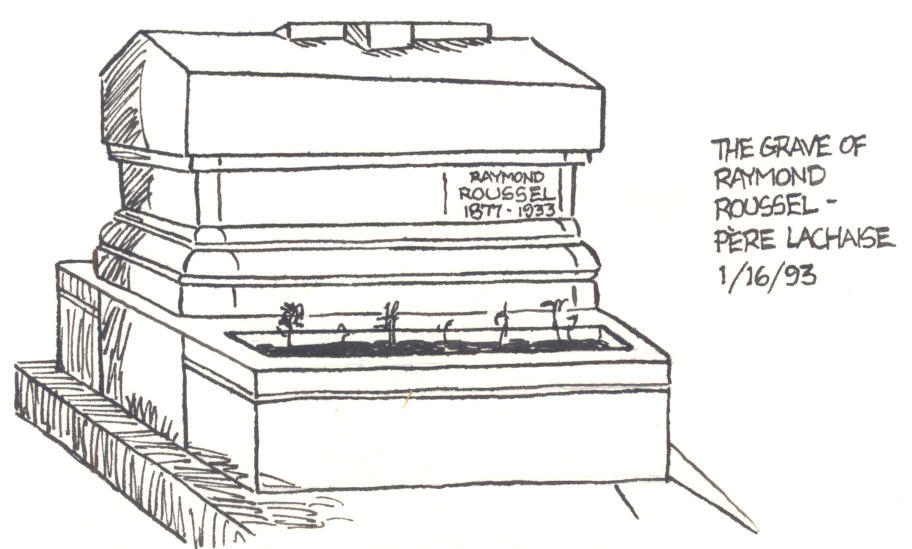
As an addendum to our toast to La Seine, I offer this sketch of the grave of Raymond Roussel, which I did on one of my visits there (yes, I went more than once).
Fittingly, the exterior is formal, the beauties hidden. Roussel was a chess buff. He therefore designed a mausoleum containing 32 compartments, inspired by the fact that the word for compartment and chess square is the same (case). After his suicide, his coffin was placed in one case: the king in one half of an endgame.
(Posted by Doug Skinner)
Tags: Literature
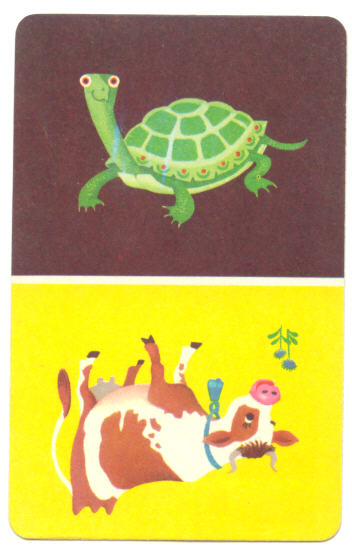
The old game of dominoes is recast with lambs, puppies, kittens, turtles, cattle, pigs, and other creatures — and a stylish job, too, in my opinion. It was published by E. E. Fairchild (no date, as usual), and cost 19c.
(Posted by Doug Skinner)
Tags: Animals · Card Games · Ephemera
