September 14th, 2008 · Comments Off on Back to School (4)
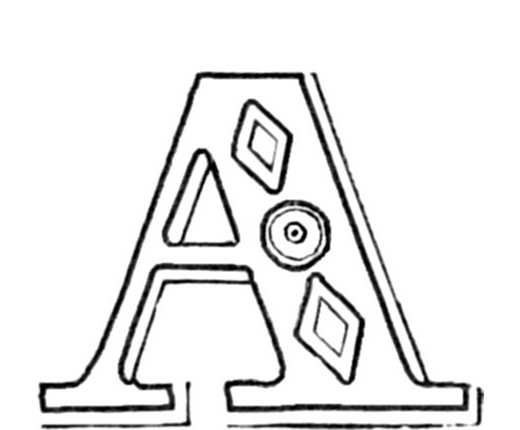
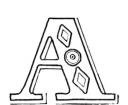 is an Abolitionist—
A man who wants to free
The wretched slave—and give to all
An equal liberty.
THE ANTI-SLAVERY ALPHABET
Alphabets usually have a not-so-hidden agenda, aiming to do more than reinforce rather arbitrary connections between the names of letters and the words that demonstrate their forms and sounds.
Some alphabets teach the names of animals or common objects. Others just purport to be alphabets but are actually morality tales in 26 brief episodes. This alphabet, published in 1847, was the bright idea of some Philadelphia abolitionists, who wished to remain anonymous. My guess is that it served a triple purpose. In addition to teaching children their ABCs, it taught them – by helping to develop their sense of empathy – that slavery was not nice. And – because parents, grandparents, older siblings, servants, or governesses would likely have read this book over and over again to their little illiterate ones – it might have effectively renewed the same ethical imperative in their own antebellum, bourgeois, callous, enervated, fatigued, and god-fearing souls.
TO OUR LITTLE READERS.
Listen, little children, all,
Listen to our earnest call:
You are very young, ’tis true,
But there’s much that you can do.
Even you can plead with men
That they buy not slaves again,
And that those they have may be
Quickly set at liberty.
They may hearken what you say,
Though from us they turn away.
Sometimes, when from school you walk,
You can with your playmates talk,
Tell them of the slave child’s fate,
Motherless and desolate.
And you can refuse to take
Candy, sweetmeat, pie or cake,
Saying “no”—unless ’tis free—
“The slave shall not work for me.”
Thus, dear little children, each
May some useful lesson teach;
Thus each one may help to free
This fair land from slavery.
Children’s literature didn’t really exist (in the modern sense of “literature”) until the 18th century, and much of that was hardcore moral instruction. Fairy tales were not exactly typical children’s fare, and fantasy in general was considered quite dangerous to young, malleable sensibilities – certainly anything without a vaguely construable Christian moral. The mainstream notion of what constitutes “appropriate” children’s literature has changed quite a bit since then, I would hope. However, a children’s book without a “point” is still a pretty rare bird. Writing such a thing might involve a thorough linguistic and narrative deconstruction: no mean feat, and, considering the still-somewhat-impressionable audience, pretty subversive if you think about it. Now that is a book worth banning!
In any case, there is a universe of forgotten children’s literature to be explored. Thanks to Project Gutenberg for this little foray.
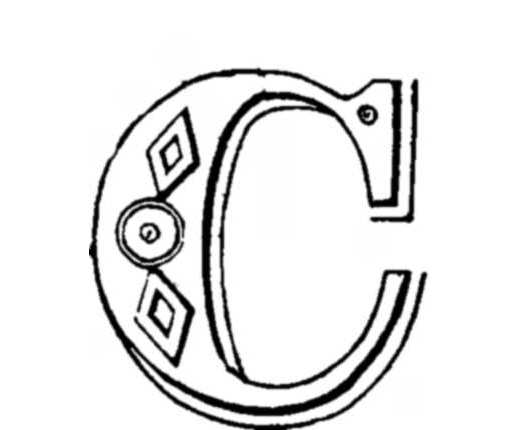
 is the Cotton-field, to which
This injured brother’s driven,
When, as the white-man’s slave, he toils,
From early morn till even.
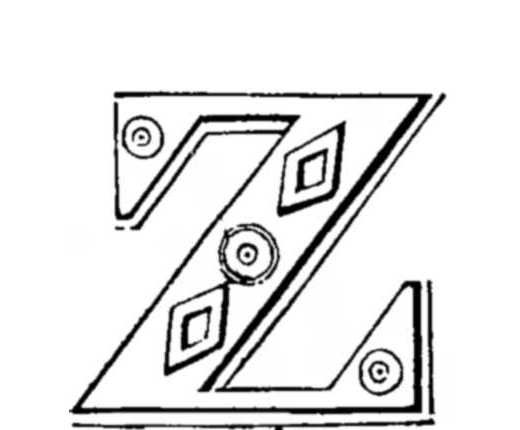
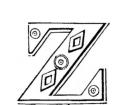 is a Zealous man, sincere,
Faithful, and just, and true;
An earnest pleader for the slave—
Will you not be so too?
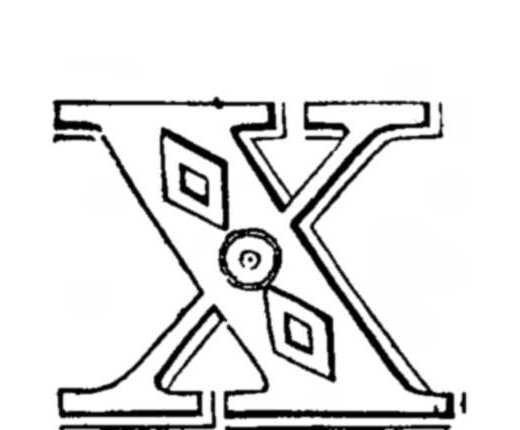
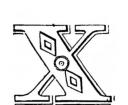 is for Xerxes, famed of yore;
A warrior stern was he
He fought with swords; let truth and love
Our only weapons be. *
*”X” is always a tricky one, isn’t it?
(Posted by Lisa Hirschfield)
Tags: Belief Systems · Education · Literature · Uncategorized
September 12th, 2008 · 3 Comments
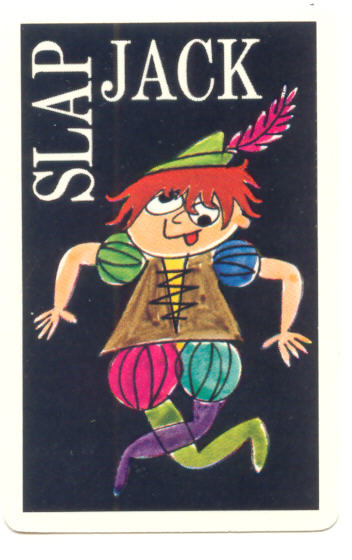
Our last “Slap Jack” dated from 1935; this one is from 1965 (Western Publishing Company). A lot has changed in those thirty years: graphics are looser; Jacks are slappier.
(Posted by Doug Skinner)
Tags: Card Games · Ephemera
September 12th, 2008 · Comments Off on Big and Little (3)
We have for you another outpost on the extremes of literature, another specimen of the radically long or brief. This one is on the short side.
The output of the Italian Futurists is uneven: sometimes exuberantly imaginative, sometimes merely creepy and jejune (especially when the fascist strain predominates). But I usually enjoy the sintesi: bits of theater cut down to their essence. Some are provocations (a single howl or gunshot), some parodistic (a five-act tragedy reduced to five lines), some gags akin to burlesque blackouts.
Angelo Rognoni, atypically, preferred the charming. Here’s my translation of his 1923 sintesi “Sunday,” which pares a day in the park down to nine lines.
SUNDAY
A public park. A bench. Downstage, a deck chair, with the FIRST MAN, obviously quite bored, stretched out on it. A girl and a soldier enter from right. They sit on the bench.
SOLDIER: Lovely day. What’s your name?
GIRL: Maria.
SOLDIER: Mine’s Carlo.
(A man crosses, holding a little boy by the hand.)
BOY (whimpers, repeats with monotonous insistence): I want a snow cone… I want a snow cone… I want a snow cone…
A WORKER (to his wife): Hurry up, hurry up. If we’re late, the theater will be full and we’ll have to stand. (They exit.)
SOLDIER (to the girl): How about a little walk? (They move off slowly.)
FIRST MAN (rising suddenly, exhaling): I’m so bored. I don’t know what to do with myself. (He leaves.)
SECOND MAN (enters, takes FIRST MAN’S seat): Ah! At last! Today I can take it easy. (He dozes as a young man enters.)
YOUNG MAN (runs across, shouting): We won! Two to zero… Two to zero… Two to zero…
(Posted by Doug Skinner)
Tags: Literature
September 8th, 2008 · 2 Comments
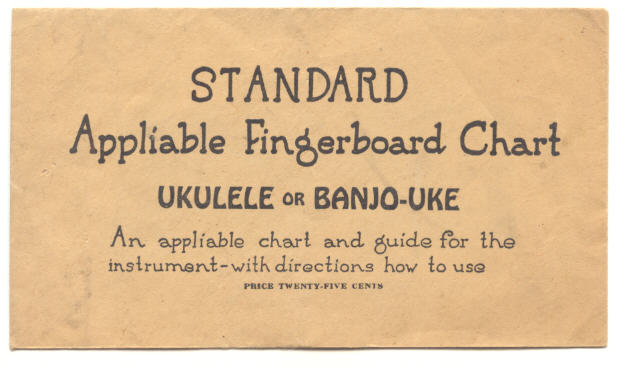
The idea is a simple one: if you have trouble learning the notes on your ukulele, simply paste this chart onto the fingerboard.
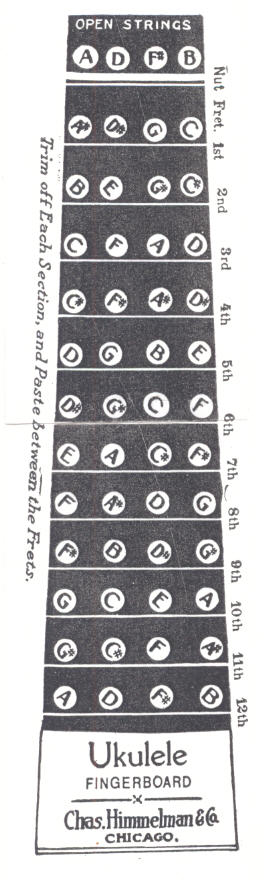
As someone who has played and taught uke for many years, however, I’d like to point out that this is not a good idea. First of all, you don’t really want to play while staring at the fingerboard. Then, too, the paper would soon fray under your fingers, leaving your fingerboard covered in sticky scraps of paper. This would make the instrument more difficult to play.
You do need to know what notes you’re playing, but it’s more practical simply to learn them. It’s not hard; if you need an Appliable Fingerboard Chart, perhaps the uke is not for you.
(Posted by Doug Skinner)
Tags: Education · Music · Ukulele
September 5th, 2008 · 4 Comments
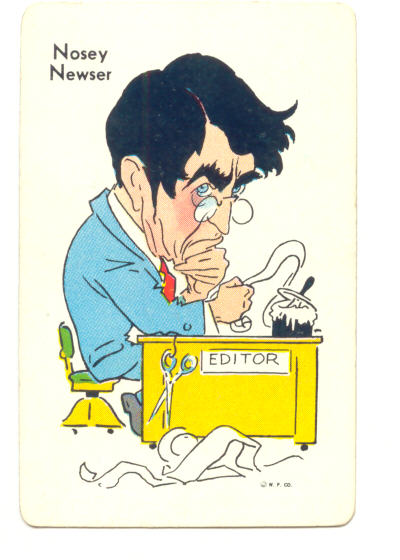
We haven’t broached the many versions of “Old Maid” yet; it’s time we did. This one came from Parker Brothers. I’d like to know when, but they won’t tell me.
Old Maid was always an odd game. The implied message is that you will become an Old Maid if you don’t pair off; but the Old Maid never looked unhappy with her lot, and the other characters only paired off with themselves, which doesn’t sound too thrilling. If I were Nosey Newser, I’d prefer another face on the pillow.
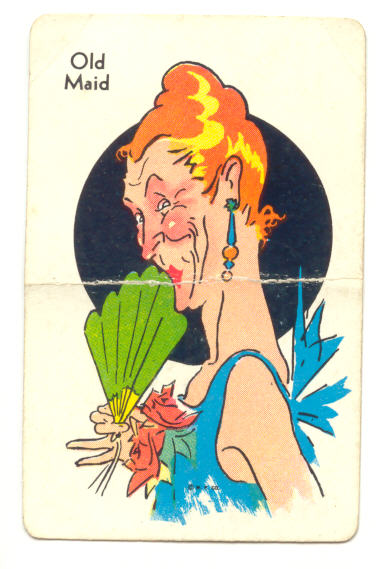
The anonymous artists seem to have enjoyed coming up with different characters and Old Maids for the game. For your heightened pleasure, I’ll also include the Old Maid for each deck, so you can compare. Here’s this one (please pardon the wrinkle; the Maid is Old).
(Posted by Doug Skinner)
Tags: Card Games · Ephemera
September 4th, 2008 · Comments Off on Bulletin (5)
I’m happy to report that “The Puppet Show,” featuring, among many other wonders, some of my collaborations with Michael Smith, will be at the Contemporary Museum in Honolulu from September 6 to November 23. For more info on the show, see Bulletin 4 on this site; for more info on the museum, look here.
The next Ullage Group fiesta-fiasco, “Through the Blackboard,” has been scheduled for September 28, at Jalopy (where else?). More details will be unveiled later.
Plans are afoot to devote some of the Ullage Group cyber-acreage to a site about that grand old man of Forteana, John Keel. I’ve known him for many years, and have interesting material to dump on you. We will keep you posted.
And a final thought. During a recent trip to the post office, the man behind me offered this assessment of one of the clerks: “Some people have such a bad aura, that if you melted ’em down and made a building out of ’em, nobody would want to go in there.”
(Posted by Doug Skinner)
Tags: Bulletins
September 4th, 2008 · 4 Comments
We have another unexpected encounter, another fleeting kiss of incongruities. All is chaos and continuity, at least sometimes.
RICHARD SHAVER AND ALBERT EINSTEIN
Richard Shaver — the visionary pulp fictioneer and painter — and Albert Einstein — the mathematical mystic and physics pioneer — were very different men. They moved in different circles. But they were both soulful and sympathetic geezers; and I’m touched, somehow, that they corresponded. The exchange was brief, and puzzling for both, but that was probably inevitable. Shaver sent Einstein his theories on aging, and Einstein told him they were wrong. And life swirled on.
And here’s what they wrote. The letters are undated, but probably from 1944.
Dear Sirs:
I think I have discovered the cause of age. Please hear me out by reading this letter carefully.
If you admit that age has a cause — then you must admit that this cause is removed by the process of birth.
If the cause were a radioactive poison — as the symptoms of radium poisoning indicate (they are same as age, under certain conditions), then you must admit that the phenomena of birth is the phenomena of removal of this poison by filters through which the food supply of the young passes. The mother’s body remains old because the poison is retained in its fabric, in contact with the young replacement cells — aging them quickly. Since this aging takes place in every living thing, we must admit that the cause is omnipresent, is everywhere. Only the sun gets around the Earth that much. So the cause must be the sun. Since radium poisoning produces the same symptoms as age in even a young person — premature age — then we must look to the sun as a source of the radioactives which cause age.
It would be remarkable if the sun did not project such poisons as radium down upon us in a finely divided state. Well, it does. Consequently, we age. We all die in time from the cumulative radioactives from the sun finding their way into our bodies.
Now to prove that birth itself is but the protecting of the young life seed from this poison by filters in the mother’s body (long enough for the new life to get a good start), we need only place some mice under conditions which would exclude this poison did it exist — and observe how long they live. If they live longer than the natural life span of caged mice — we have done something to defeat age.
All right, I have done so. My protected mice live long, much longer, two, three, and when very special care is taken, four times longer than ordinary mice. My results are staggeringly indicative that this attack upon age is the correct one.
The experiments performed by Alexis Carrel and by some hydroponics experts, raising living cells in a protected condition, feeding them only artificially prepared food and triple distilled water to keep out all alien material, show — if so interpreted, that life so protected by filtration and distillation, does not die or even cease growing, but keeps on growing at an alarming rate.
That Alexis Carrel and others did not attribute their success in defeating age in these living bits of matter to the exclusion of some poison is only because this is a new and unusual view of the cause of age. They just didn’t happen to think of it. Their puzzlement over the cause of the immortality of their chicken heart muscle and tomato roots in nutrient solutions is apparent in their reports. When the theory of radioactives as the cause of age is applied to their experimental results, the mystery disappears.
Hoping to arouse some interest in this explanation of age and this remedy for age,
I remain, your friend
Richard Shaver
Dear Sir:
Your idea cannot be right because it does not make understandable why the sperma-cells which multiply independently from the rest of the organism through the generations do not undergo the process. The simplest case for which your theory is obviously insufficient is the unicellular organism which propogates through simple splitting of the cell. I remember also the experiments with embryonic cells of the heart which are not degenerating in a number of years much greater than the life span of the corresponding animal.
Sincerely yours, signed
Albert Einstein
(Posted by Doug Skinner. The letters are extracted from Ray Palmer’s partwork, The Hidden World.)
Tags: Belief Systems · The Ineffable
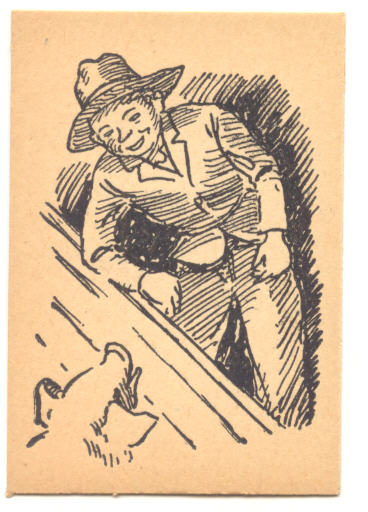
“Gris” (Piglet) is a modest little offering from Denmark. There’s no date or publisher; this must have been a low-ticket toy. The Danish kid got 16 black and white cards, each with a lovely pen and ink sketch. I’m afraid I can’t tell you how it was played.
(Posted by Doug Skinner)
Tags: Card Games · Ephemera
August 23rd, 2008 · Comments Off on Back to School (3)
Spelling Book Poetry
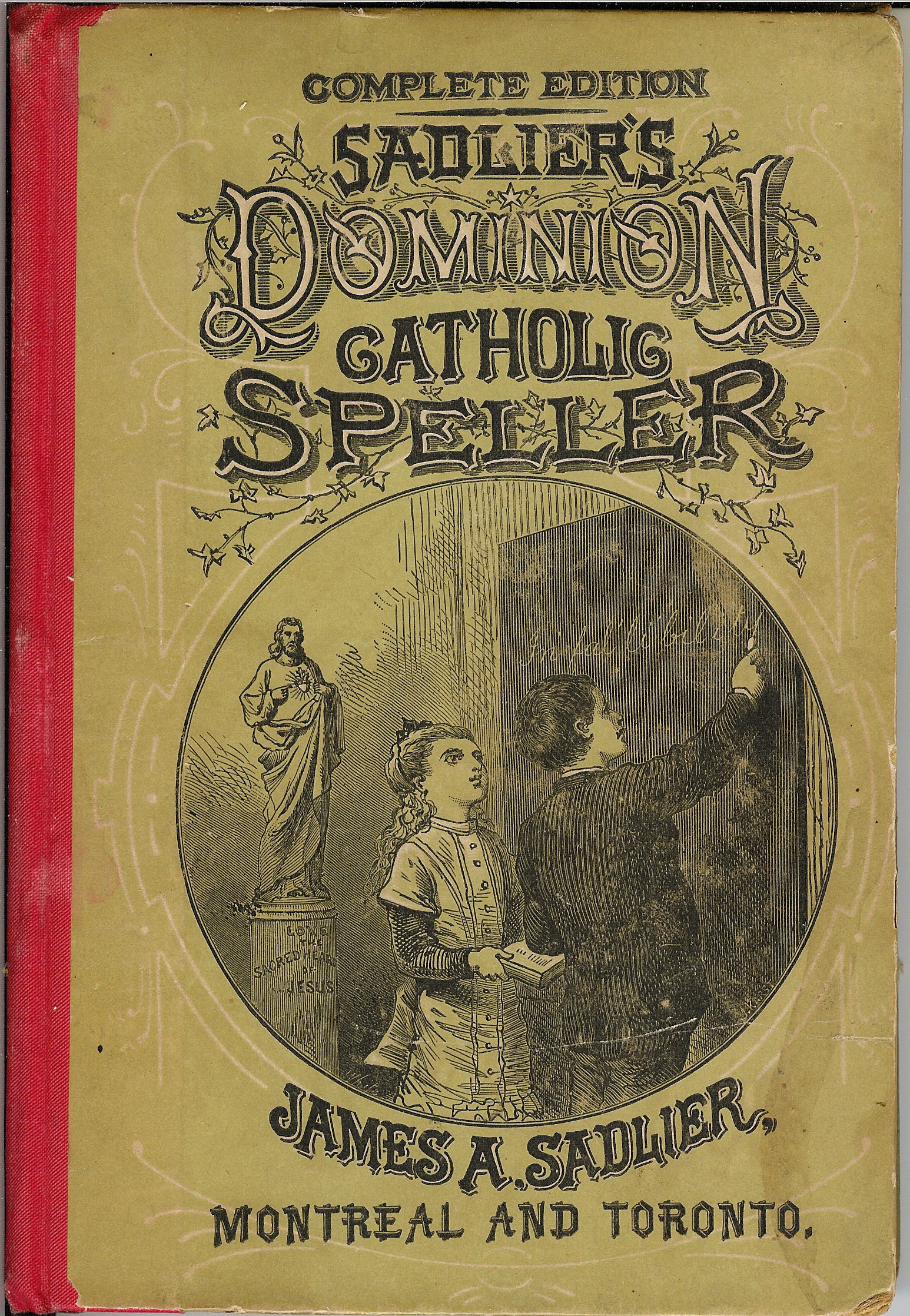
The Sadlier’s Dominion Catholic Speller (by a Catholic teacher, 1883), is much more than a spelling book. It encompasses spelling “oral and written,” including detailed explanations of phonetics, pronunciation, syllabics, grammar and syntax, Latin and Greek etymology, and common abbreviations and titles. I’ve never seen a modern speller this comprehensive – then again, it’s Canadian. I heard once that Canadians have always been notoriously good spellers.
The beautiful cover engraving depicts a young boy demonstrating his newly-acquired understanding of orthography to a young girl (his sister? a sweetheart?). Note that he has chosen the word “infallibility.
Words are listed in categories such as “Exchange and Trade” (peddler, dime, wampum, gamble, forgery); “Provisions”(shad, nutmeg, hogshead, bullets, marmalade); “Vegetable Kingdom” (anther, twining, delicious, rootlet, mangrove); and “Words Relating to War” – quite a lot of these (ramrod, bulwark, chevron, pension, watchword).
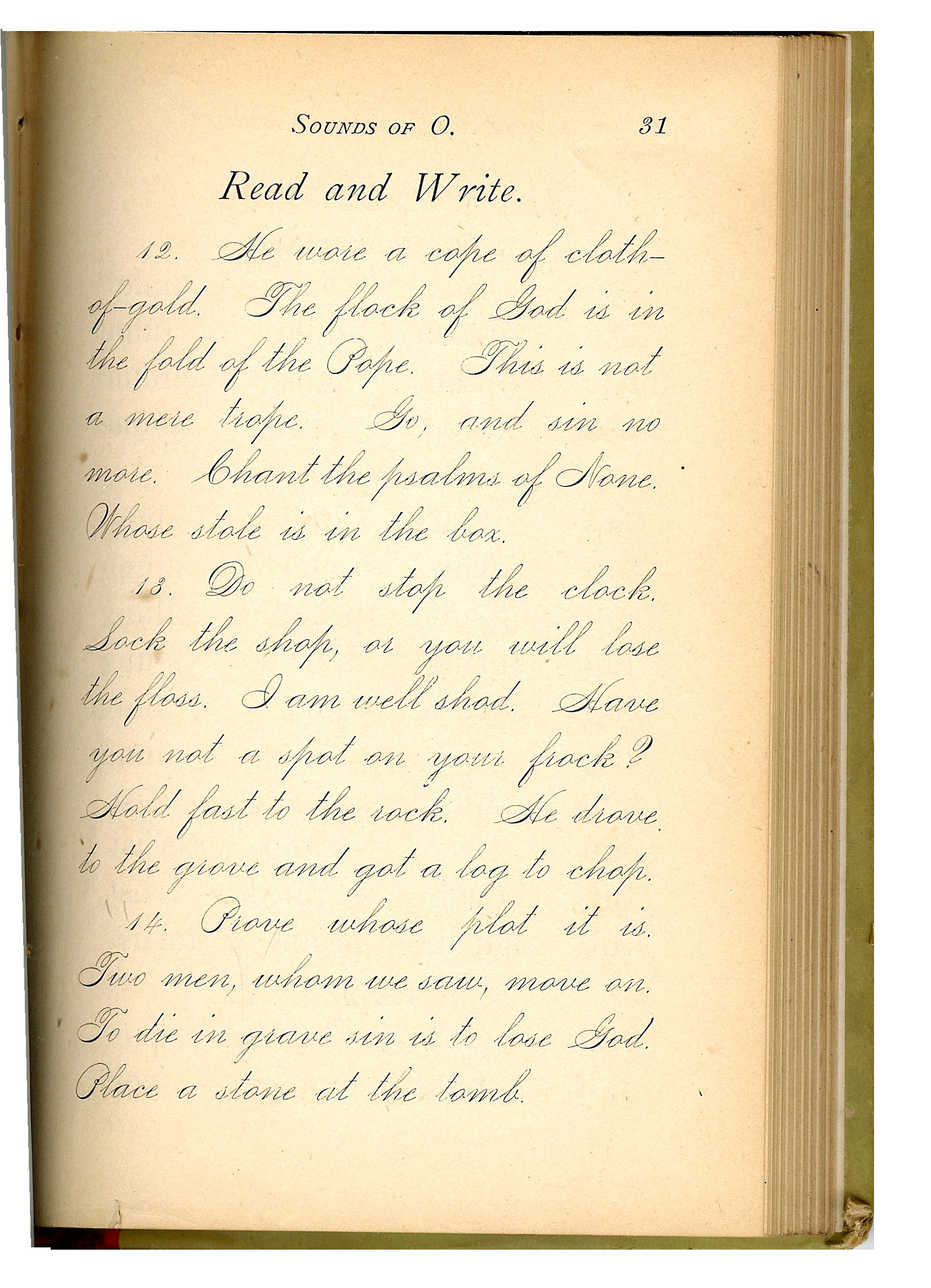
Both the “Dictation Review” and “Read and Write” sections drill students in various vowel sounds by using as many words as possible with a particular vowel in each sentence. The result is oddly poetic, if somewhat nonsensical at times.
12. He wore a cape of cloth-of-gold. The flock of God is in the fold of the Pope. This is not a mere trope. Go, and sin no more. Chant the psalms of None. Whose stole is in the box.
13. Do not stop the clock. Sock the shop, or you will lose the floss. I am well shod. Have you not a spot on your frock? Hold fast to the rock. He drove to the grove and got a log to chop.
14. Prove whose plot it is. Two men, whom we saw, move on. To die in grave sin is to lose God. Place a stone at the tomb.
(Posted by Lisa Hirschfield)
Tags: Belief Systems · Education · Ephemera
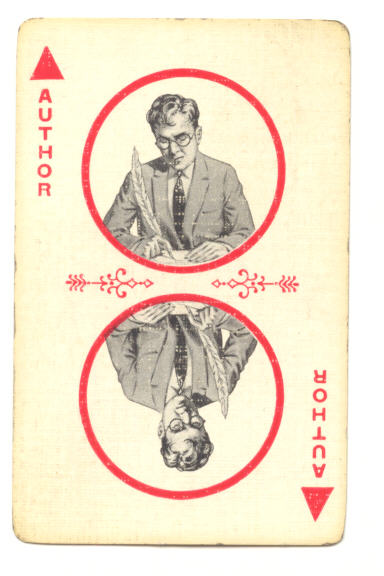
From 1928 comes “Kam-ra! A Motion Picture Card Game.” It’s credited to Josephine O. Miranda, and published by the Kam-ra Card Company in Hollywood. The other face cards are: Star, Hero, Producer, and Director. I’m not sure why our author is batting out that screenplay with a quill pen, but good luck to him.
(Posted by Doug Skinner)
Tags: Card Games · Ephemera

 is an Abolitionist—
 is the Cotton-field, to which
 is a Zealous man, sincere,
 is for Xerxes, famed of yore;