September 13th, 2010 · 2 Comments
(f)utility
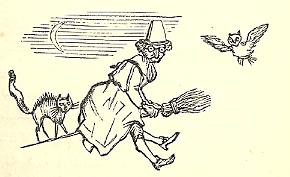
A broom’s a useful thing, no doubt of it:
It cleans a room, and then flies out of it.
“Empiric” is an interesting word: it means both “charlatan” and “based on observation and experience.” Embedded in the language is the dogma that only theory and system can validate.
No, you don’t bolster your machismo
When you acquire the latest gizmo.
gibberish about licorice
I’ll pass on those loaves and fishes, Jesus; dirty hands breed food-borne illnesses (cf. Mark 7: 1-8).
We can move in several directions through space, but only in one through time; what’s the point of that?
The ancients saw the births of monsters as portents of disasters. The advent of deep-fried butter, doughnut hamburgers, and chocolate-covered bacon must be an evil omen.
We’ve even managed to monetize monetization: people are paid to determine the “value” of services and commodities.
Even as a child, I didn’t understand why I was told that natural laws were evidence of divinity; and that deviations from natural law were miracles, which were also evidence of divinity.
I didn’t shave; and so my stubble
Will burst that effervescent bubble.
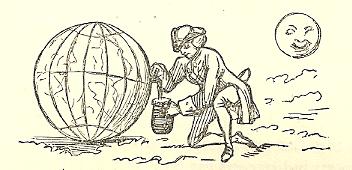
(Posted by Doug Skinner. The sketch is by Thackeray.)
Tags: Education
September 9th, 2010 · 3 Comments
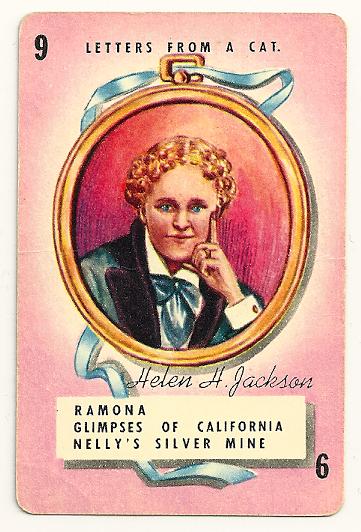
We have another look at the fine old game of “Authors,” here in an undated deck from Russell. I particularly like that ribbon. Has anyone out there read this one?
(Posted by Doug Skinner)
Tags: Card Games · Ephemera · Liminal Graphics
September 8th, 2010 · 1 Comment
…that you can make coffee at home? You don’t have to buy it at a cafe or doughnut shop! Many grocery stores sell cans of roasted, ground coffee “beans.” This black powder is not good to eat; but, if you spoon some into a paper filter and pour boiling water over it, you will get coffee just like the kind that you buy in cafes. In fact, that’s how they make it themselves! You may even find that the coffee that you make is fresher and less expensive. One word of caution: don’t forget to place a cup under the filter to collect the coffee. Otherwise, it will spill all over your floor: and nobody likes an untidy kitchen.
…that you are not the center of the universe? It may seem that way, because you can see things all around you, no matter which way you turn. But this is just an optical illusion: you can only be in one place at a time, and you will see things all around you wherever you are. In fact, other people see things that way too, and they’re not all the center of the universe, are they? You see, the universe is very large and sprawling, and doesn’t really have a center. You can still insist that it can have a subjective center, and behave as if you were in that important position, but then nobody will want to be your friend.
…that you can purchase things with cash? Our federal government, in Washington, D.C., issues bills and coins that can be used just like a credit or debit card. Some people even prefer them, because you can use them without paying fees or interest. They have also been decorated by professional artists, with portraits of politicians, religious mottoes, pictures of eagles and pyramids, and other comical designs that you can look at while waiting in line at the checkout counter. Remember, though, that if you pay with cash, the cashier keeps the coins and bills, and you cannot have them back. But don’t be upset: you can always get more.
(Posted by Doug Skinner)
Tags: Education
September 3rd, 2010 · 4 Comments
On July 28th, members of the Ullage Group took a field trip to Bannerman Castle, organized by Dr. Mamie Caton.

For train passengers, a partial and too-brief view of Bannerman Castle can be had just south of Beacon, NY. The castle is situated on a small island once called Pollepel (renamed Bannerman’s Island), now part of the Hudson Highlands State Park.
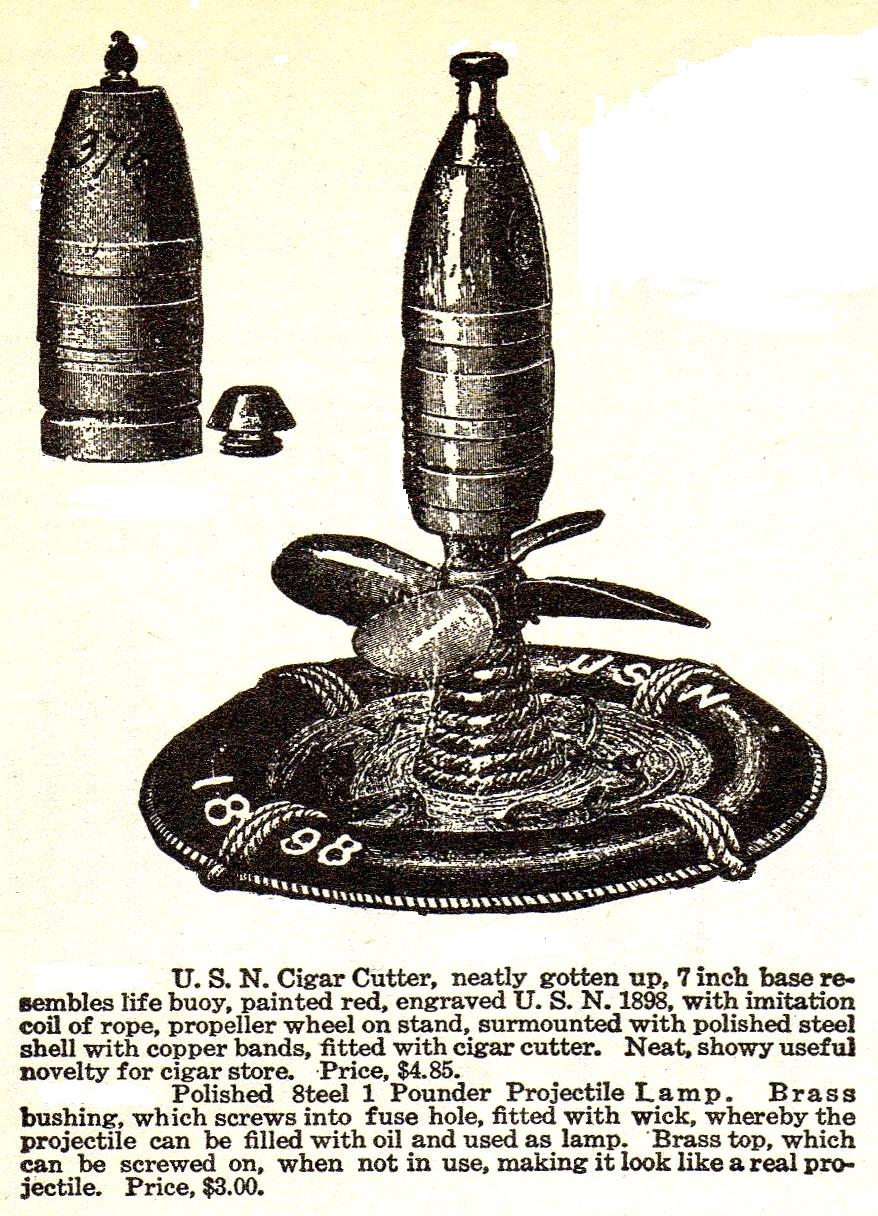
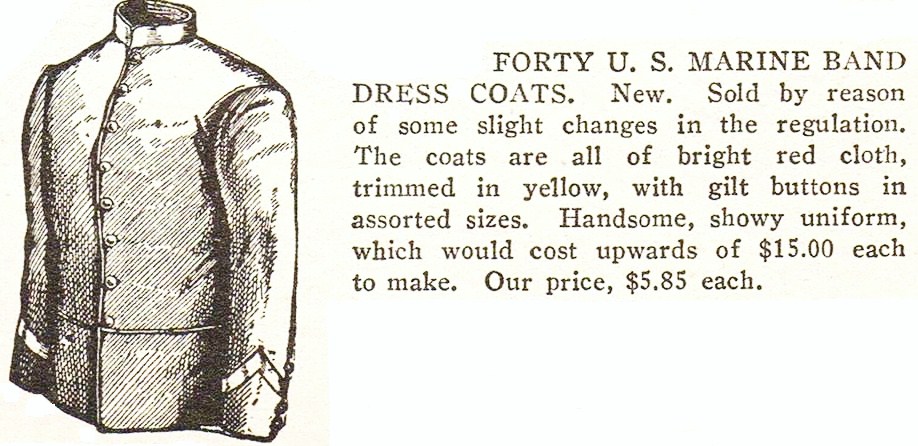
“Bannerman’s Island Arsenal” – as giant, crumbling letters on north wall of the building proclaim – was built in 1900 by Francis Bannerman, a dealer in military surplus. The dealership was a family operation that lasted several generations, perhaps because he took the savvy long view in matters of war and peace. When the War Department found itself unable to equip properly the volunteers who came to the country’s defense (capturing Puerto Rico in the process), the Bannermans were there: selling the surplus Civil War guns and ordnance it had purchased 30 years prior back to the US Government.
The Spanish-American War provided additional business opportunities. Not only did the company buy arms from the Spanish before they left Cuba, it purchased nearly all captured Spanish military goods from the U.S. Government once the war was over. Francis Bannerman began construction on his arsenal when his New York City storeroom could no longer contain his ever-growing stock of guns, cannon, uniforms, crossbows, bayonets, and artillery – including 30 million munitions cartridges.
Bannerman & Sons operated on an international scale, marketing their goods to foreign War Departments as perceived need (or the perceived possibility of need) arose. As Peace reared her unprofitable head and opportunities for wartime deployment of outdated weapons dwindled, Bannerman’s business survived: his goods served double-duty as fashionable antiques for the discerning collector, interior designers favoring the “martial look,” museums, paramilitary and historical organizations, as well as theatrical productions, including Buffalo Bill’s show. He also operated his own military museum on lower Broadway in Manhattan.
From the 1927 catalogue
[Read more →]
Tags: Dead Media · Eccentrics · Mysteries · Places
September 2nd, 2010 · 4 Comments
“The Cheerful Game of Porky the Pig” was one of three games in the set “Children’s Hour,” a 1946 offering from Parker Brothers. The others were “Peanut the Elephant” and “ABC Fishing.”
Porky had no connection with the familiar character from Warner Brothers; I suspect there were numerous pigs called Porky over the years. The deck featured a variety of animals and objects, all chosen to encourage the players to make noise. Noise is fun; I like the crisp black, yellow, and red color scheme too.
(Posted by Doug Skinner.)
Tags: Card Games · Ephemera · Liminal Graphics
 .
.
Why shouldn’t a frog fall from the sky? Does it have something better to do?
divested of vistas
It isn’t wise to buy or sell a
Lot of eggs with salmonella.
The artist sees art as the true business of life. The audience sees art as a diversion from the true business of life. There will be misunderstandings.
another newscaster slip: “leaphole” for “loophole”
Why does my phone have a camera, but no can-opener?
Animals don’t really have a kingdom, and aren’t really organized on a tree: those are human filing systems. Visualizing them with a different model — a series of interlocking rings, for example — is a quick way to rinse out your beliefs.
Don’t eat that shiny sheet of mica!
It’s not a food! Do you have pica?
Her entrance did not entrance us.
I said, “A word to the wise is –“; oh, skip it.
I can’t build castles in the air;
I have to wash my underwear.
(Posted by Doug Skinner. The sketch is by Thackeray.)
Tags: Education
Salt and pepper packets occupy a strange position in our strange society. In a country that monetizes everything, they’re free. Everybody knows and uses them; and they pass unnoticed. Other condiment packets contain commercial products familiar to the condiment-eater: the ketchup and mustard look like the bottles in the store. Salt and pepper are also branded; but the brands in food service packs are essentially generic. After all, common salt and pepper are just salt and pepper; except for “gourmet” or flavored varieties, product differentiation is impossible. A free generic product? In the USA? Say what?
Somebody had to design these things — knowing all too well that the designs didn’t really matter, and that nobody would look at them. So, for those of you who consistently misunderstand the Ullage Group’s spotlight on liminal graphics, here is a selection. In the interest of more focused pleasure, I’m only posting pepper.
By the way — I didn’t consciously collect these. I knew I had a small bowl in the kitchen with packets left over from takeout. But I didn’t know there were so many designs, since I’d never bothered to look at them.
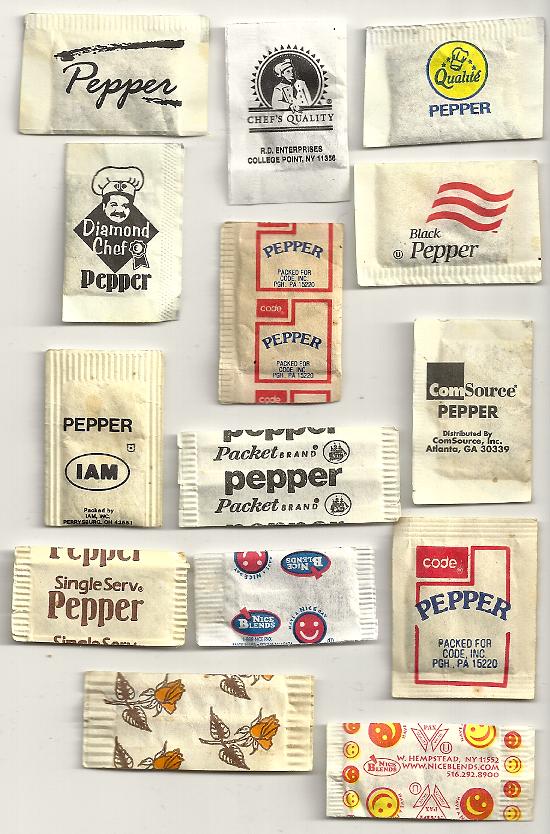
(Posted by Doug Skinner.)
Tags: Dietary Mores · Ephemera · Liminal Graphics

These “Tree Spotter Cards” were published by Ed-U-Cards (no date). The precise illustrations and warm colors give them a cozy look, I think. And as the box copy enthuses, “It’s fun, too, playing the ’64 Point Game,’ learning many interesting facts about the different kinds of trees, and becoming an expert!”
(Posted by Doug Skinner)
Tags: Card Games · Ephemera
August 25th, 2010 · Comments Off on An Ullage Dozen (24): Somethingization
genial mobs with menial jobs
The word “Luddite” has changed meanings. It originally meant someone who was opposed to technology; now it means someone who doesn’t buy every digital product on the market. A rejection of uncritical consumerism is not a rejection of technology; this misunderstanding is unfortunate.
A writer’s bio, in a textbook,
Can cite his last, but not his next, book.
another newscaster slip: “trading secretaries” for “trading securities”
coma / amok
No, you may not use my storage
Space for your uneaten porridge.
Even in the smallest club, performers over-amplify to over-ride chatter and to compel attention. Perhaps the same technique could be used in classrooms.
A phrase from a dream: “the supposed somethingization of something.” I like the sound of that; I have so many things that could use a good somethingization.
I was singing all summer, the Grasshopper said,
Now I’m cold, and I’m hungry, and begging for bread.
But your Aunt wouldn’t help him; she took up a broom,
And she swept the poor Grasshopper out of the room.
Don’t just stand there; stand over there, too.
We view life through a certain filter;
Which, all too often, slips off-kilter.
(Posted by Doug Skinner.)
Tags: Education
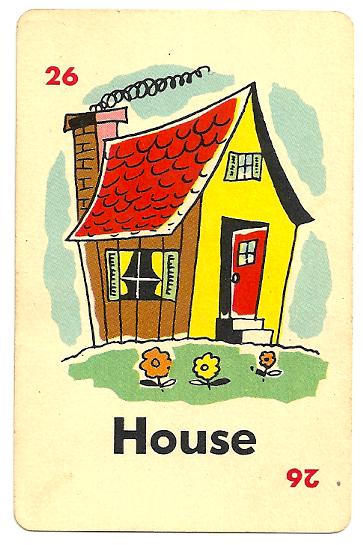
“Card Magic” was a 1959 deck from Ed-u-Cards; it provided pictorial cards that allowed the young magician to perform various tricks. This card was used in the “Spelling Trick.” As a bonus, an “applause” card was also included, so the audience would know when that was expected.
(Posted by Doug Skinner)
Tags: Card Games · Ephemera
