Since so little is available in English about Alphonse Allais, and since I’m translating him, I think it would be useful to post a description of his complete works. The standard edition was edited by François Caradec, and published by La Table Ronde in eleven volumes, from 1964 to 1970. I’ll summarize it in four posts, unless anyone objects.
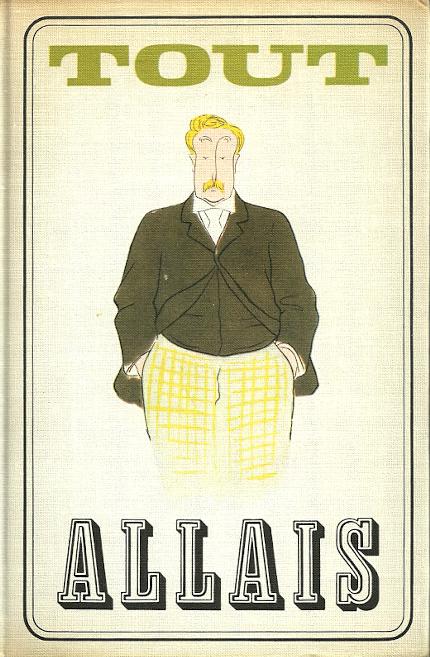
Volume 1 (1964, 604 pp.) contains the first five collections of what Allais called his “anthumous works.” Each contains short pieces culled from his contributions to various Parisian periodicals. A se tordre (Double Over) (1891) was the first, with 45 pieces, drawn largely from Le Chat Noir. Although Allais also wrote serious short stories early in his career, with this first book he established himself primarily as a humorist.
Vive la Vie! (1892) was a smaller collection, with 29 pieces.
Pas de Bile! (No Bile!) (1893) collected 39 pieces.
Le parapluie de l’escouade (The Squadron’s Umbrella) (1893) also collected 39 pieces. The title refers to a traditional joke for a new recruit: he was sent to bring back the squadron’s umbrella.
Rose et Vert-Pomme (Pink and Apple-Green) (1894) contained 44 pieces.
This first volume also has an introduction and an illustrated chronology of Allais’s life, both by Caradec. The cover caricature was drawn by Leonetto Cappiello in 1900.
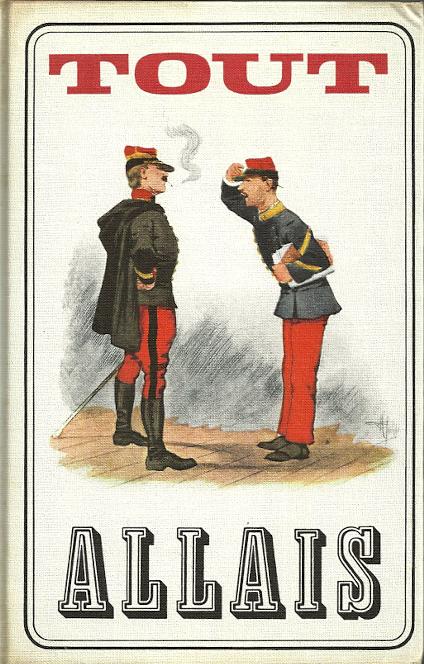
Volume 2 (1967, 478 pp.) contains the next three volumes of the anthumous works.
2 + 2 = 5 (1895) collected 65 stories.
On n’est pas des boeufs (We Are Not Cattle) (1896) collected 44 stories.
And Le bec en l’air (The Nose in the Air) (1897) collected 51 stories.
The cover illustration is by Albert Gullaume, from My 28 Days, 1898. Guillaume and Allais had traveled to Chicago together in 1893 to report on the Exposition; Guillaume later quarreled with Allais when the latter signed an “anarchist” petition.
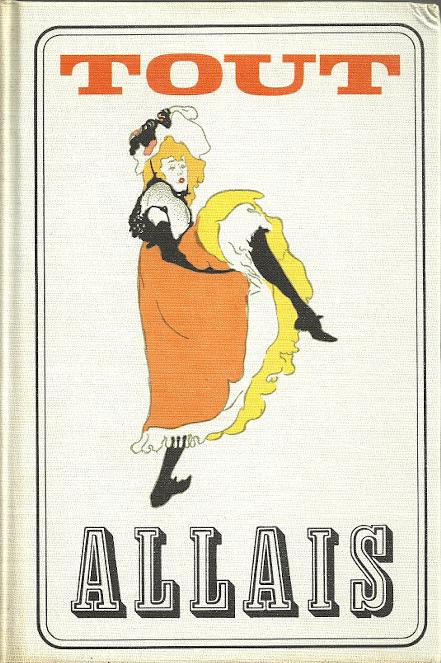
Volume 3 (1968, 525 pp.) contains the last four anthumous books.
Amours, délices, et orgues (Loves, Delights, and Organs) (1898) collects 47 stories. The title is made up of the three words in French that are masculine in the singular and feminine in the plural.
Pour cause de fin de bail (Because the Rent Is Due) (1899) contains 54 pieces.
Ne nous frappons pas (Let Us Not Hit One Another) (1900) collects 58 pieces.
Allais’s final collection, Le Captain Cap (1902) was devoted to the exploits of his friend Captain Cap, Albert Caperon, who often appeared in Allais’s stories. It includes a dossier on Caperon’s run for parliament in 1893, as well as 47 stories about Cap, many reprinted from earlier collections, and several rewritten to include the Captain. My illustrated translation is available from Black Scat Books.
The cover illustration is Toulouse-Lautrec’s drawing of the dancer Jane Avril, who was tied romantically to Allais from about 1892 to 1894.
(Posted by Doug Skinner)
Tags: 'pataphysics · Alphonse Allais · Literature
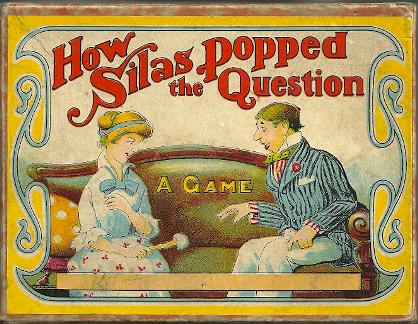
“How Silas Popped the Question,” published in 1915 by Parker Brothers, was another precursor of “Mad Libs,” like the other early games “Dr. Quack” and “Peter Coddle.” One player reads the story of Silas’s attempts to overcome his shyness and propose to Sally, and the others read cards giving his many unromantic attempts at conversation. “The one who laughs most wins!”
It came in a handsome box.
(Posted by Doug Skinner)
Tags: Card Games
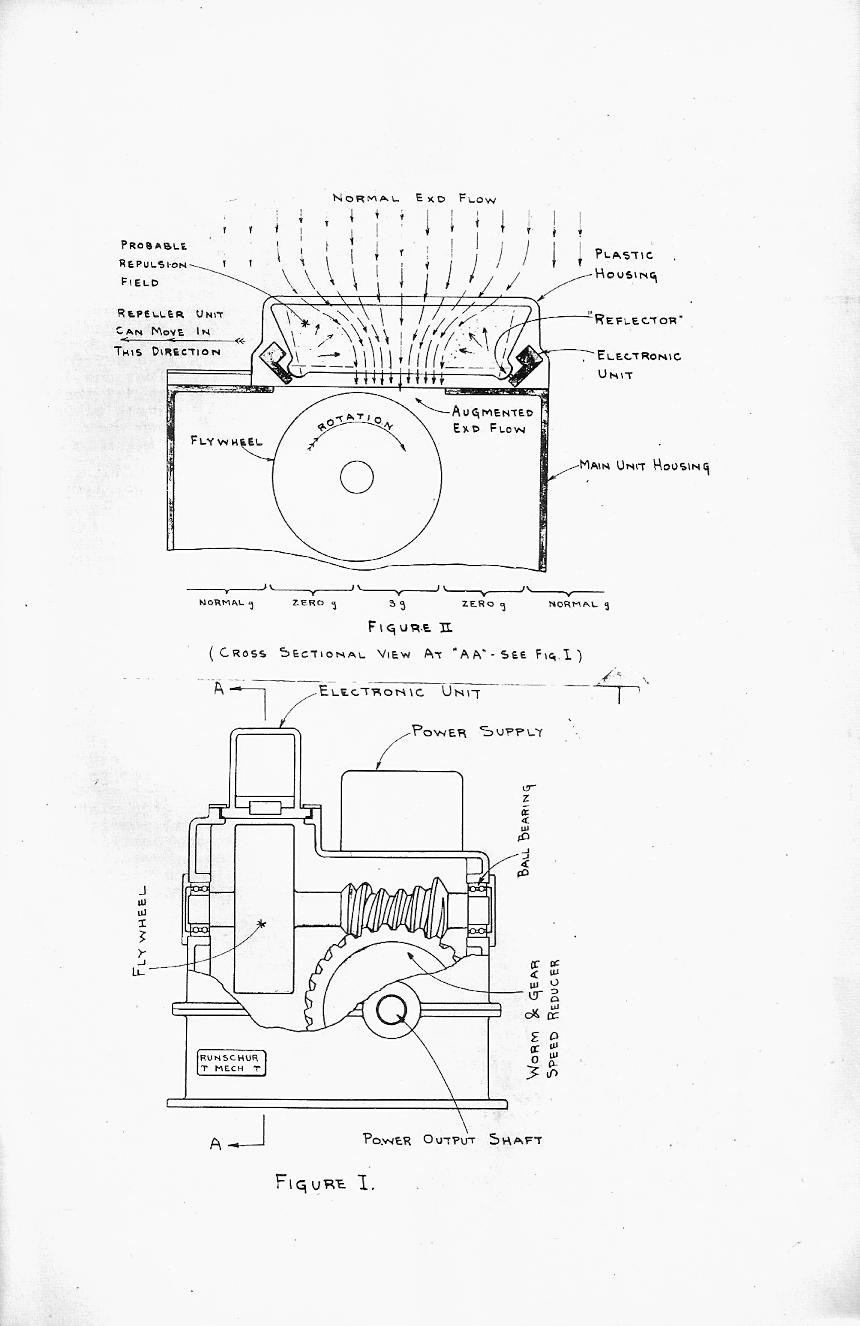
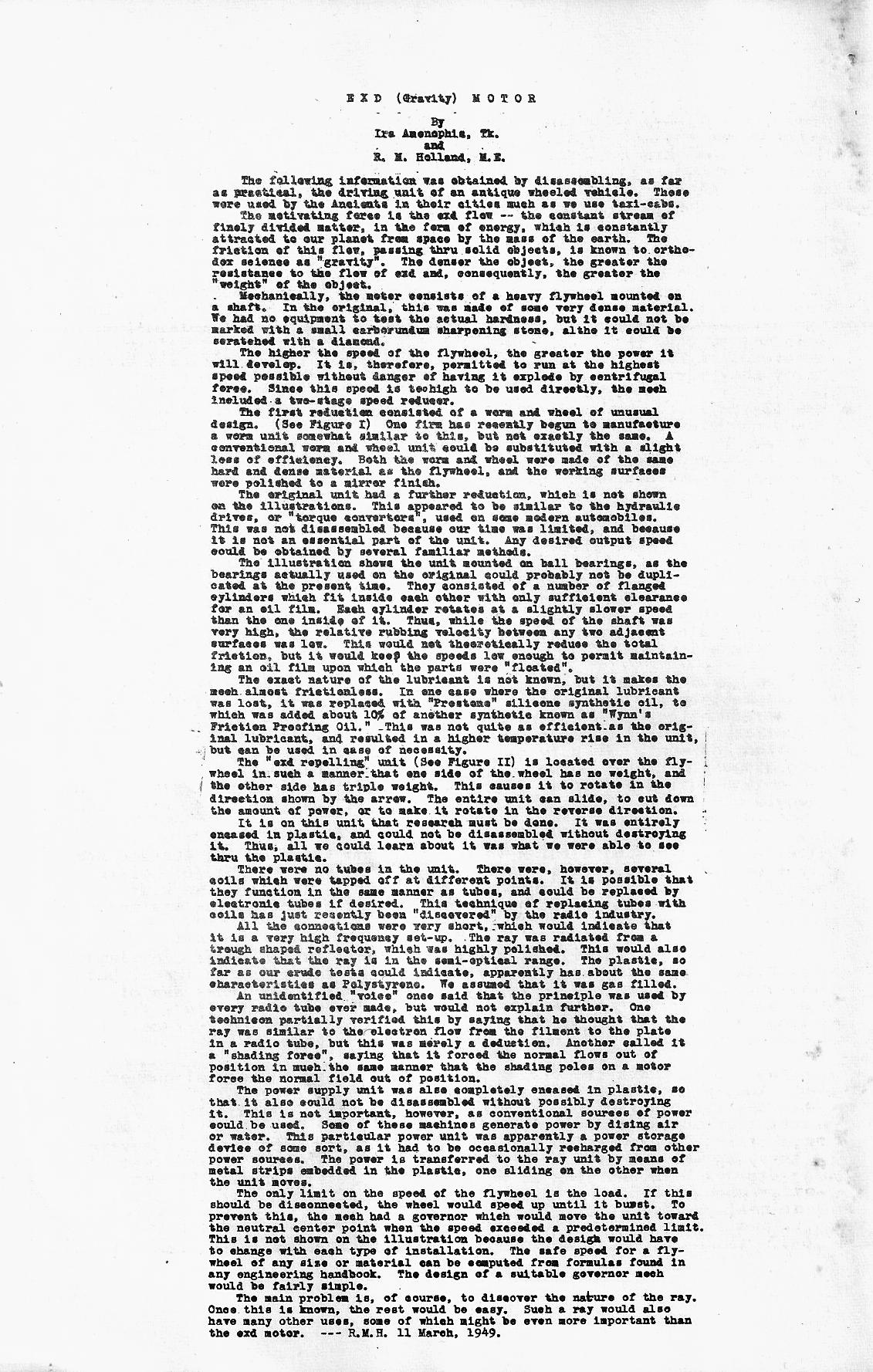
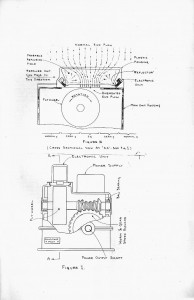
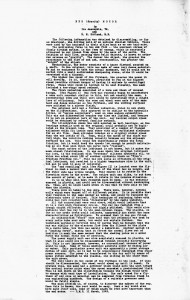
In the late 1940s, fans and followers of Richard Shaver tried to research his claims. Some of them tried to find their way into the caves he had described; others tried to build the machines that he claimed the cavern races used underground. Of the latter, most concentrated on the telaug, or telepathy augmenter, or on the ben ray, a healing device. Ralph Holland, however, came up with this “exd motor,” which was published in the The Shaver Mystery Magazine, Volume 3, Number 1, in 1949.
“Exd,” in Shaver’s physics, was star ash, the residue of dead stars, which fell to earth and caused gravity. The idea wasn’t original; it had been championed in the 18th century by Georges-Louis Le Sage, among others. Holland offered a motor that was powered by exd.
Holland also claims that he studied it by dismantling one of the vehicles used by the cavern races. This seems unlikely; perhaps the answer lies with his collaborator, Ira Amenophis (that last name being the Greek form of Amenhotep). Holland, along with other Shaverites, claimed to be in psychic or telaug contact with some of those subterraneans. Ira was one of those, so perhaps he supplied the information.
I don’t think anyone tried to build this. According to the account, it was made of a particularly dense, unknown metal, and required an unknown power storage unit. You’re welcome to experiment.
(Posted by Doug Skinner)
Tags: Literature
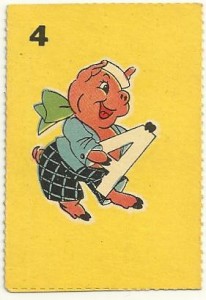
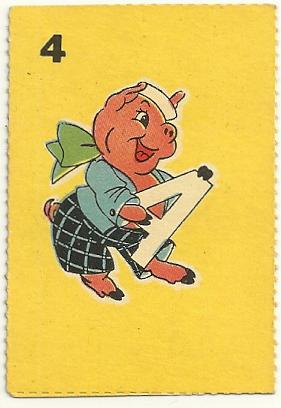
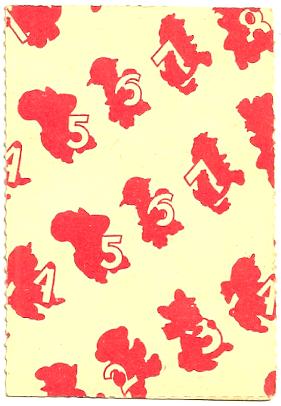
This “Crazy Eights” deck comes with no indication of date or publisher. It has perforated edges, so maybe it was sold as a sheet. It bears images of animals carrying numerals: raccoon, bear, rabbit, pig, squirrel, lamb, duck, and kitten. For some reason, the first four are set against a yellow background, and the last four against blue. I like the silhouettes on the back.
(Posted by Doug Skinner)
Tags: Card Games
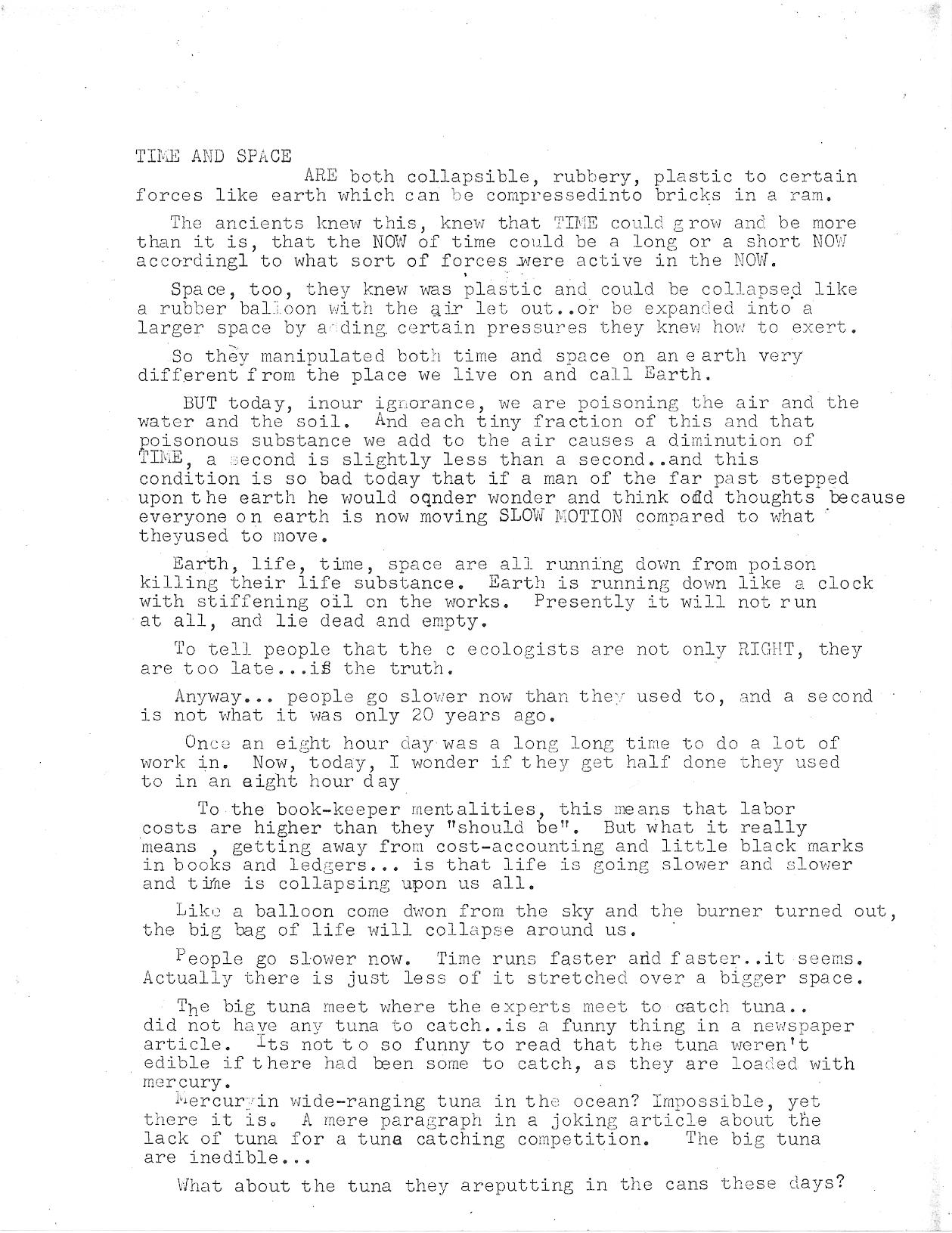
May 12th, 2014 · Comments Off on Richard Shaver on Time and Space
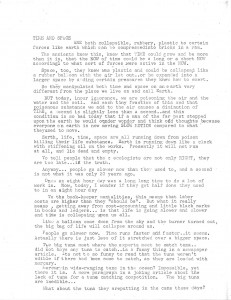
Every now and then, we like to post something about Richard Shaver. Here we have some of his ruminations on time and space, and, at the end, a bit about tuna. (Please click to enlarge.)
(Posted by Doug Skinner)
Tags: Ancient History · Literature

“Animal Families” was published by the venerable Austrian firm Piatnik; no date is given. The artwork is, however, credited: “After the original paintings by Hubert Lechner (Vienna Academy).”
There are ten “families”: Deer, Domestic Animals, Fresh-Water Fish, Salt-Water Fish, African Animals, Birds of Prey, Parrots, Humming-Birds, Finches, and Indian Animals. A curious system of classification, but as good as any other, I suppose.
(Posted by Doug Skinner)
Tags: Card Games
April 15th, 2014 · Comments Off on Bulletin (28)
There is a nice of review of my illustrated translation of Captain Cap, by Alphonse Allais, over at Tam Tam Books. You can purchase a copy from Amazon, you know.
I’m happy to report that I’ve been nominated for a Pushcart Prize, for my comic strip “Shorten the Classics: Moby Dick,” in Black Scat Review #2. Melville and I are honored.
My upcoming publications from Black Scat Books include The Unknown Adjective, and Other Stories, containing 100 pages of my comics and picture stories (June), and an edition of Alphonse Allais’s plays and monologues, in my translation (July).
Both Anthony Matt and I will appear in the “Congress of Curious Peoples,” at Coney Island, on May 1. I’ll be talking about the “Hermes Project,” the attempt by Richard Shaver’s fans to build the machines from his stories; Anthony will discuss a variety of healing machines. Also on the bill will be Shannon Taggart, on Kirlian photography, and James Riley, on William Burroughs’s use of tape recorders. There is info here.
(Posted by Doug Skinner)
Tags: Alphonse Allais · Bulletins
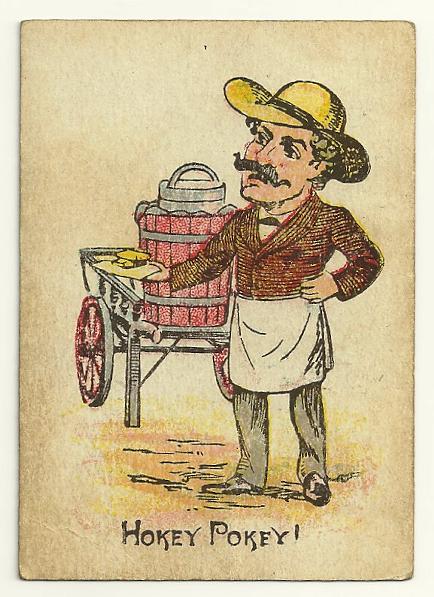
I’m going to return to posting children’s card games. Maybe I’ll post another 200. For those who came in late, my interest is in the anonymous graphics and cultural footnotes found in this most disposable of genres.
The gentleman above is from a deck of “Snap,” undated, and identified only as “British Manufacture.” Cursory research tells me that “hokey pokey” was late 19th century slang for ice cream, particularly that sold by Italian street vendors; it also sometimes meant toffee, or ice cream with toffee, but apparently mostly in New Zealand.
All of the cards represent street vendors and their cries, giving a charming glimpse of life in the UK at that time; although I hope the real vendors didn’t have such large heads. The others are: “Scissors to Grind!”, “Chairs to Mend!”, “Coals!”, “Winners!” (racetrack results, I imagine), “Cat’s Meat!”, “1d a Bunch!” (flowers), “Sweep!” (chimney sweep), “1d All the Way!” (streetcar conductor), “Muffins O!”, “Old Clo’!”, and “”All a Growing!” (plants).
(Posted by Doug Skinner)
Tags: Card Games
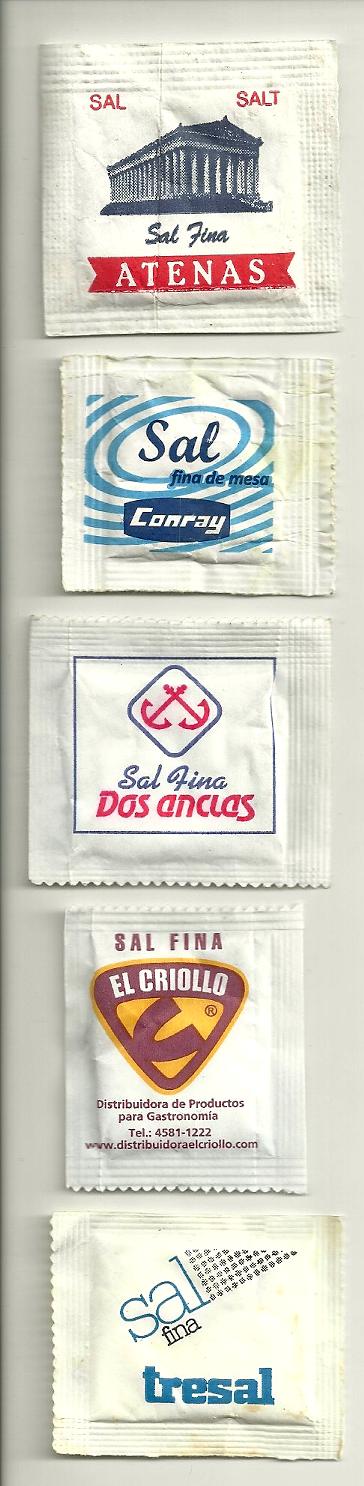
When I travel, my favorite souvenirs are the small, overlooked items, particularly those sporting liminal, anonymous graphics. Here, for example, are some of the salt packets I collected on a trip to Buenos Aires last year. I particularly like the first. It’s Attic salt!
(Posted by Doug Skinner)
Tags: Liminal Graphics · Places
March 20th, 2014 · Comments Off on Spring
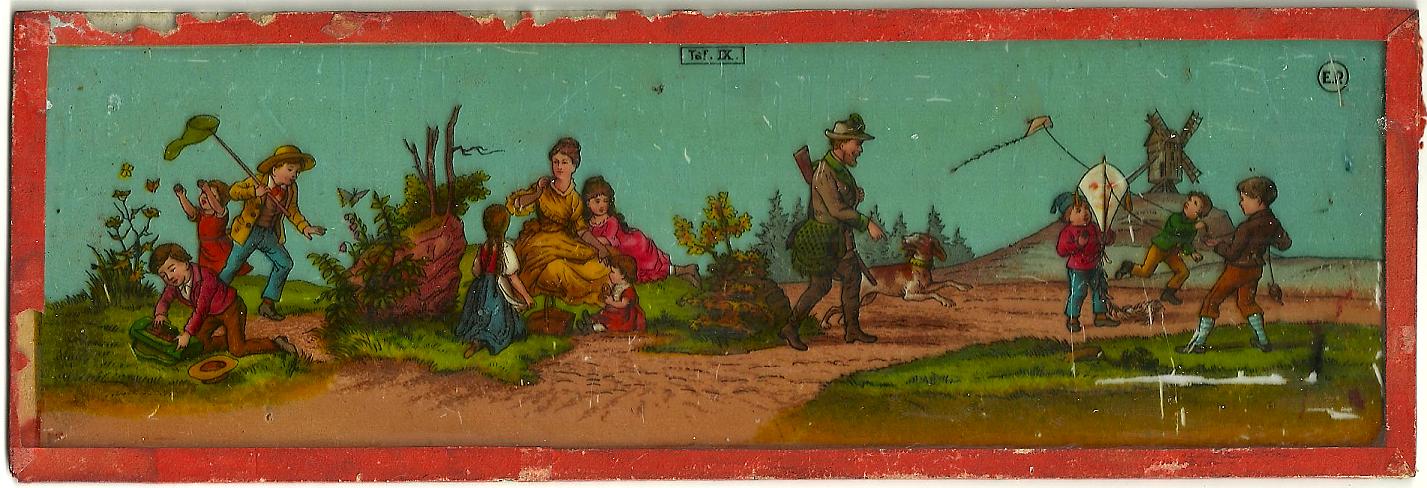
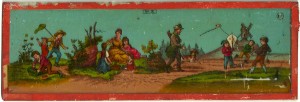
Spring is here. It’s been a particularly harsh winter here in NYC. I hope that this magic lantern panorama slide heralds better times.
(Posted by Doug Skinner)
Tags: Liminal Graphics